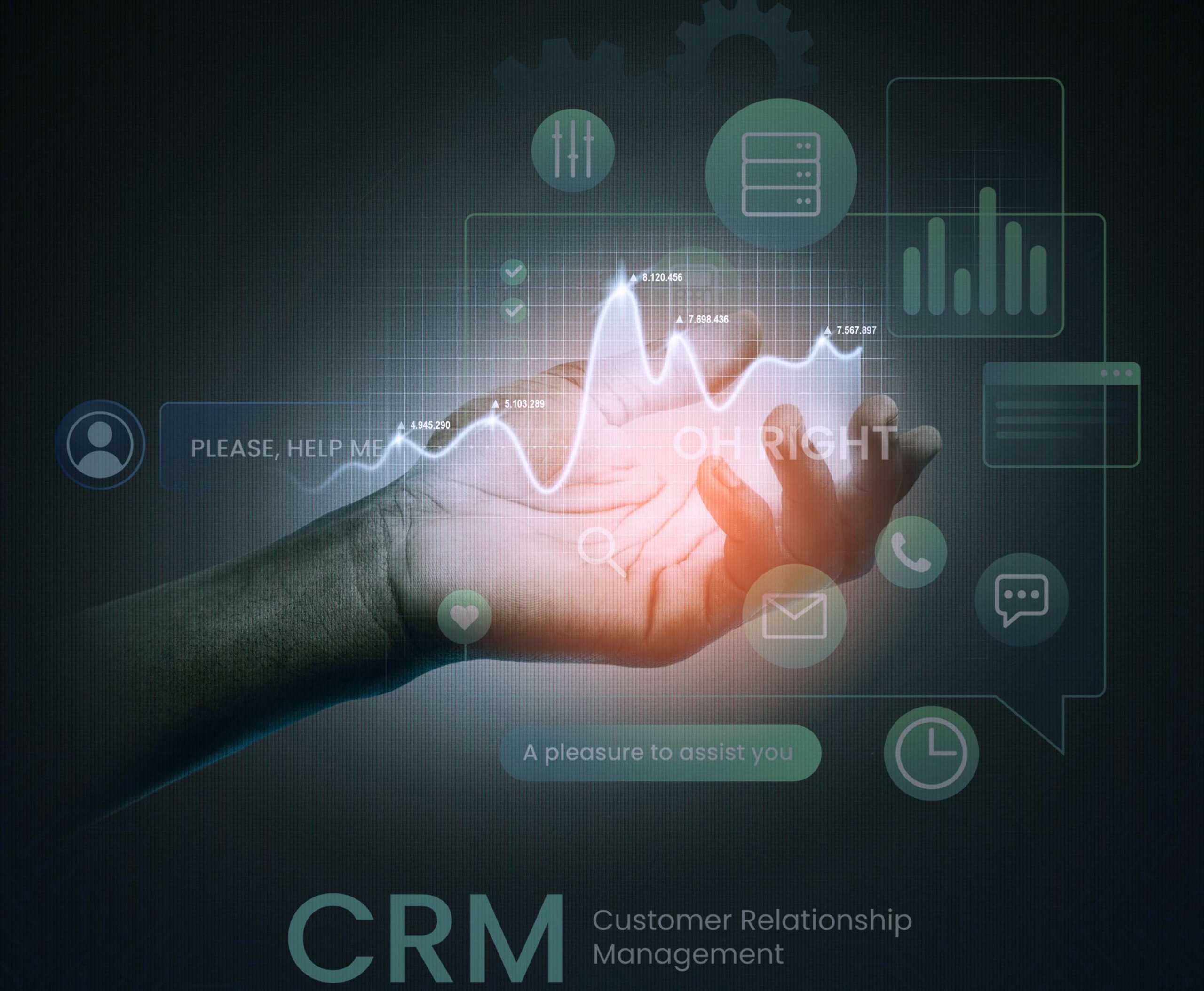
Should You Build a Custom CRM or Buy an Existing One for Better ROI?

Should You Build a Custom CRM or Buy an Existing One for Better ROI?

| 6 min read

Every growing company eventually reaches a point where using messy spreadsheets, separate inboxes, and quick fixes stops working. Leads get lost, making reports take hours, and no one can clearly see the sales pipeline. 

The first big dilemma they face is choosing between a ready-to-use CRM and a custom-built system. At first glance, standard platforms like Salesforce, HubSpot, or Zoho seem like no-brainers. They offer fast deployment, brand-name credibility, and seemingly low starting fees. 

However, as seat licenses compound, paid add-ons pile up, and team members invent manual workarounds to accommodate rigid UI layouts, the hidden costs begin to mount. Conversely, custom CRM builds offer exact workflow alignment and zero recurring seat fees. 

Yet they demand significant upfront capital and long-term engineering responsibility. Nucleus Research shows that an average CRM implementation delivers between $3.10 and $8.70+ in return for every dollar spent. 

If you want to capture maximum ROI, it depends entirely on how your software aligns with your growth stage. In this write-up, we break down this choice from three angles: founder, CFO, and ops lead. Expect hard numbers, real failure rates, and no vendor bias. Let’s get to work. 

Custom CRM Software vs. Off-the-Shelf Tools Explained

To evaluate Return on Investment accurately, we must look past initial price tags and define what each model truly entails over a 3-to-5-year lifecycle.

  • Off-the-Shelf CRMs: Multi-tenant SaaS products designed to suit the “average” enterprise or SMB. You pay a monthly fee per user to access pre-engineered modules, standard workflows, and third-party integrations. You adapt your business processes to the software’s architecture.
  • Custom CRMs: Proprietary software applications built specifically for your business processes, data schema, and security requirements. You own the code outright, eliminate per-seat licensing, and dictate every interface detail and automated workflow.

Deciding is hard since both paths have distinct upsides, downsides, and levels of success. You simply Google it about custom vs off-the-shelf CRM, and there will be a lot of confident-sounding content. 

However, this is not as simple as it looks. For instance, a team starts small, signs up for a CRM in an afternoon, and things work fine for a while. They grew with more reps, products, and a weirder sales process. 

Then came a moment when someone suggested whether to build your own CRM. That question mainly arises when your subscription invoices look uncomfortably large, or the fifth workaround gets bolted on. 

As a matter of fact, there is no harm in that evolution. It is a completely normal, sensible path for most businesses. Experts around CRM also suggest the same. Nearly all find it best to start small with a ready-made CRM. Later, based on your growth, revisit the build decision only when complexity or cost justifies it. 

Remember that ready-made CRM is and will never be a bad decision. If it works, it works. Your real problems only begin when you get your custom one too fast. Yet still unaware of what you need, or you wait too long while wasting it on clunky workarounds. 

Which One Custom or Off-the-Shelf Fits Your Business Right Now

Honestly, neither one wins universally. What the data actually supports is a fairly clear pattern based on where your business is right now. Every technology is suitable yet effective in its own way. 

If you have a small team with normal workflows, just buy an existing tool. As a general rule, teams under 5 to 10 users save more money and time by buying off-the-shelf. Only look into custom software when your team gets much bigger or subscription fees get too high.

Similarly, for an early-stage company still figuring out how you even want to sell, a small, affordable off-the-shelf platform is ideal. It will typically provide you with a better ROI since your investment is small, setup is fast, and it buys you time to actually learn what your business needs in the long term.

Besides that, if you’re growing fast and your workflow is genuinely unusual, building from scratch makes more sense. Once a company starts adding sales reps, expanding into new markets, and juggling multiple pipelines, the recurring subscription costs and workflow limitations of a ready-made platform can start actively slowing growth down.

This will be the point where a custom build starts paying for itself. This tracks with broader industry consensus, too. Just follow existing custom CRM trends in order to ensure more flexibility, scalability, and long-term ROI. 

Meanwhile, ready-made CRM is too good for faster deployment, lower cost, and simpler setup for newbies. More than that, it is worth remembering that CRM in general, no matter which you work with, tends to pay for itself when it is done right. 

According to Capterra, 45% of companies across different industries reported real sales revenue improvement from using a CRM productively.  Following that around, 99% of B2B businesses now rely on CRM software specifically for customer retention. 

The upside is genuinely there. So the question we are trying to answer here is which CRM delivers better what you need. We have made it completely easy to choose one that upside for your specific situation without quietly adding more cost.

Choose an Off-the-Shelf CRM If:

  • Your sales pipeline follows conventional stages, where standard platforms excel out of the box.
  • You need a fully functional customer management system to live within days or weeks.
  • You have fewer than 20 to 30 users and are still iterating on your core go-to-market model.
  • You prefer paying an ongoing subscription so that vendor manage security, hosting, and compliance.

Choose a Custom CRM If:

  • Your sales, fulfillment, or servicing processes create a competitive advantage that standard software cannot accommodate. 
  • You have a large team or an extensive external user base where seat licenses strain margins.
  • You must tightly couple customer data with proprietary legacy ERPs, internal databases, or specialized operational engines.
  • You operate under stringent GDPR, HIPAA, or financial compliance requirements that demand absolute control.

How to Actually Make the Call Between Custom CRM Software vs. Off-the-Shelf?

Honestly, the platform is rarely the actual reason a CRM investment fails to pay off. It is actually the way you implement it, for whom you implement it, and the right tech partner to work with. 

Roughly 55% of CRM implementations fail to meet their planned objectives. All mostly claim that user adoption is consistently cited as the number one cause, no matter whether it’s custom CRM Software vs. off-the-shelf. 

Different analysts land on slightly different numbers. For example, Gartner has put the failure rate around 50%, Forrester around 47%, and other studies range anywhere from 30% to 70%. 

However, what we all agree on is that CRM failures come down to people-related issues rather than the technology itself. Sit with that for a second, because it reshapes the whole build-vs-buy conversation. 

It means the most expensive mistake a company can make isn’t picking customs when they should’ve bought, or buying when they should’ve built. While overlooking training, change management, and leadership genuinely using it, they label the platform as a problem. 

If you don’t plan for training, ownership, and follow-through after go-live, no amount of build-vs-buy analysis is going to save the project. To get a real sense of things rather than just crunching numbers, keep these points in mind before walking away:

  • See how many people will actually use this. Under roughly 10 users with a standard sales motion, buying is almost always the smarter starting point.
  • Check out if your process is actually unusual, or does it just feel unusual to you. Many of our workflows map well onto a well-configured off-the-shelf tool. 
  • Complex operations, regular industries, or deep telephony/hardware integrations are where custom solutions outshine off-the-shelf. 
  • Would you be able to bear hefty ongoing engineering costs? If the honest answer is we don’t really have spare engineering capacity, that’s a strong signal to buy, no matter how fast an AI-assisted prototype comes together.
  • Assess if you have a real plan for adoption. If yes, or you think you will figure it out after launch, fix that first. It matters more than the build-vs-buy decision itself.
  • Off-the-shelf buys you speed now. Custom buys you control later. Which one your business needs more of depends on how fast and how oddly you expect to grow.

Still Not Sure Which Way to Go?

If your company operates on standard workflows and requires immediate speed to market, an off-the-shelf CRM provides the fastest path to positive return. 

However, as your operation scales, standard platforms can hit a ceiling where licensing bloat, fragmented add-ons, and process friction begin to eat away at productivity.

When software friction actively impedes your growth, transitioning to a custom CRM transforms your business entirely. 

In fact, businesses that get the best return aren’t the ones that pick a side out of principle. They will be those who honestly assess their needs, revisit the decision, and put as much effort into adoption. 

None of it matters much if the people executing on it don’t know what they’re doing. A custom CRM built by a team that doesn’t understand your industry will end up just as painful as an off-the-shelf tool. 

Whichever path you choose, working with people who’ve actually done this before isn’t a nice-to-have. It’s the difference between a CRM that pays for itself and one that becomes another expensive lesson.

Matech CO earns a solid reputation as one of the most reliable CRM companies in the USA. When you hire us, we sit down, review your actual workflows and growth plans, and land on the path that suits you best. 

At the end of it all, a good CRM just needs to fit the habits of your team, grow right alongside you, and come with people who actually help you figure it out.

Author Image

By Matech CO editorial team

Combining global expertise in technology, strategy, and creative thinking, we deliver pioneering solutions that drive what's next. Keep up with the latest advancements and insights by following our updates.

Every growing company eventually reaches a point where using messy spreadsheets, separate inboxes, and quick fixes stops working. Leads get lost, making reports take hours, and no one can clearly see the sales pipeline. 

The first big dilemma they face is choosing between a ready-to-use CRM and a custom-built system. At first glance, standard platforms like Salesforce, HubSpot, or Zoho seem like no-brainers. They offer fast deployment, brand-name credibility, and seemingly low starting fees. 

However, as seat licenses compound, paid add-ons pile up, and team members invent manual workarounds to accommodate rigid UI layouts, the hidden costs begin to mount. Conversely, custom CRM builds offer exact workflow alignment and zero recurring seat fees. 

Yet they demand significant upfront capital and long-term engineering responsibility. Nucleus Research shows that an average CRM implementation delivers between $3.10 and $8.70+ in return for every dollar spent. 

If you want to capture maximum ROI, it depends entirely on how your software aligns with your growth stage. In this write-up, we break down this choice from three angles: founder, CFO, and ops lead. Expect hard numbers, real failure rates, and no vendor bias. Let’s get to work. 

Custom CRM Software vs. Off-the-Shelf Tools Explained

To evaluate Return on Investment accurately, we must look past initial price tags and define what each model truly entails over a 3-to-5-year lifecycle.

  • Off-the-Shelf CRMs: Multi-tenant SaaS products designed to suit the “average” enterprise or SMB. You pay a monthly fee per user to access pre-engineered modules, standard workflows, and third-party integrations. You adapt your business processes to the software’s architecture.
  • Custom CRMs: Proprietary software applications built specifically for your business processes, data schema, and security requirements. You own the code outright, eliminate per-seat licensing, and dictate every interface detail and automated workflow.

Deciding is hard since both paths have distinct upsides, downsides, and levels of success. You simply Google it about custom vs off-the-shelf CRM, and there will be a lot of confident-sounding content. 

However, this is not as simple as it looks. For instance, a team starts small, signs up for a CRM in an afternoon, and things work fine for a while. They grew with more reps, products, and a weirder sales process. 

Then came a moment when someone suggested whether to build your own CRM. That question mainly arises when your subscription invoices look uncomfortably large, or the fifth workaround gets bolted on. 

As a matter of fact, there is no harm in that evolution. It is a completely normal, sensible path for most businesses. Experts around CRM also suggest the same. Nearly all find it best to start small with a ready-made CRM. Later, based on your growth, revisit the build decision only when complexity or cost justifies it. 

Remember that ready-made CRM is and will never be a bad decision. If it works, it works. Your real problems only begin when you get your custom one too fast. Yet still unaware of what you need, or you wait too long while wasting it on clunky workarounds. 

Which One Custom or Off-the-Shelf Fits Your Business Right Now

Honestly, neither one wins universally. What the data actually supports is a fairly clear pattern based on where your business is right now. Every technology is suitable yet effective in its own way. 

If you have a small team with normal workflows, just buy an existing tool. As a general rule, teams under 5 to 10 users save more money and time by buying off-the-shelf. Only look into custom software when your team gets much bigger or subscription fees get too high.

Similarly, for an early-stage company still figuring out how you even want to sell, a small, affordable off-the-shelf platform is ideal. It will typically provide you with a better ROI since your investment is small, setup is fast, and it buys you time to actually learn what your business needs in the long term.

Besides that, if you’re growing fast and your workflow is genuinely unusual, building from scratch makes more sense. Once a company starts adding sales reps, expanding into new markets, and juggling multiple pipelines, the recurring subscription costs and workflow limitations of a ready-made platform can start actively slowing growth down.

This will be the point where a custom build starts paying for itself. This tracks with broader industry consensus, too. Just follow existing custom CRM trends in order to ensure more flexibility, scalability, and long-term ROI. 

Meanwhile, ready-made CRM is too good for faster deployment, lower cost, and simpler setup for newbies. More than that, it is worth remembering that CRM in general, no matter which you work with, tends to pay for itself when it is done right. 

According to Capterra, 45% of companies across different industries reported real sales revenue improvement from using a CRM productively.  Following that around, 99% of B2B businesses now rely on CRM software specifically for customer retention. 

The upside is genuinely there. So the question we are trying to answer here is which CRM delivers better what you need. We have made it completely easy to choose one that upside for your specific situation without quietly adding more cost.

Choose an Off-the-Shelf CRM If:

  • Your sales pipeline follows conventional stages, where standard platforms excel out of the box.
  • You need a fully functional customer management system to live within days or weeks.
  • You have fewer than 20 to 30 users and are still iterating on your core go-to-market model.
  • You prefer paying an ongoing subscription so that vendor manage security, hosting, and compliance.

Choose a Custom CRM If:

  • Your sales, fulfillment, or servicing processes create a competitive advantage that standard software cannot accommodate. 
  • You have a large team or an extensive external user base where seat licenses strain margins.
  • You must tightly couple customer data with proprietary legacy ERPs, internal databases, or specialized operational engines.
  • You operate under stringent GDPR, HIPAA, or financial compliance requirements that demand absolute control.

How to Actually Make the Call Between Custom CRM Software vs. Off-the-Shelf?

Honestly, the platform is rarely the actual reason a CRM investment fails to pay off. It is actually the way you implement it, for whom you implement it, and the right tech partner to work with. 

Roughly 55% of CRM implementations fail to meet their planned objectives. All mostly claim that user adoption is consistently cited as the number one cause, no matter whether it’s custom CRM Software vs. off-the-shelf. 

Different analysts land on slightly different numbers. For example, Gartner has put the failure rate around 50%, Forrester around 47%, and other studies range anywhere from 30% to 70%. 

However, what we all agree on is that CRM failures come down to people-related issues rather than the technology itself. Sit with that for a second, because it reshapes the whole build-vs-buy conversation. 

It means the most expensive mistake a company can make isn’t picking customs when they should’ve bought, or buying when they should’ve built. While overlooking training, change management, and leadership genuinely using it, they label the platform as a problem. 

If you don’t plan for training, ownership, and follow-through after go-live, no amount of build-vs-buy analysis is going to save the project. To get a real sense of things rather than just crunching numbers, keep these points in mind before walking away:

  • See how many people will actually use this. Under roughly 10 users with a standard sales motion, buying is almost always the smarter starting point.
  • Check out if your process is actually unusual, or does it just feel unusual to you. Many of our workflows map well onto a well-configured off-the-shelf tool. 
  • Complex operations, regular industries, or deep telephony/hardware integrations are where custom solutions outshine off-the-shelf. 
  • Would you be able to bear hefty ongoing engineering costs? If the honest answer is we don’t really have spare engineering capacity, that’s a strong signal to buy, no matter how fast an AI-assisted prototype comes together.
  • Assess if you have a real plan for adoption. If yes, or you think you will figure it out after launch, fix that first. It matters more than the build-vs-buy decision itself.
  • Off-the-shelf buys you speed now. Custom buys you control later. Which one your business needs more of depends on how fast and how oddly you expect to grow.

Still Not Sure Which Way to Go?

If your company operates on standard workflows and requires immediate speed to market, an off-the-shelf CRM provides the fastest path to positive return. 

However, as your operation scales, standard platforms can hit a ceiling where licensing bloat, fragmented add-ons, and process friction begin to eat away at productivity.

When software friction actively impedes your growth, transitioning to a custom CRM transforms your business entirely. 

In fact, businesses that get the best return aren’t the ones that pick a side out of principle. They will be those who honestly assess their needs, revisit the decision, and put as much effort into adoption. 

None of it matters much if the people executing on it don’t know what they’re doing. A custom CRM built by a team that doesn’t understand your industry will end up just as painful as an off-the-shelf tool. 

Whichever path you choose, working with people who’ve actually done this before isn’t a nice-to-have. It’s the difference between a CRM that pays for itself and one that becomes another expensive lesson.

Matech CO earns a solid reputation as one of the most reliable CRM companies in the USA. When you hire us, we sit down, review your actual workflows and growth plans, and land on the path that suits you best. 

At the end of it all, a good CRM just needs to fit the habits of your team, grow right alongside you, and come with people who actually help you figure it out.

Start your cloud migration today

Experience Faster and Smarter Operations With Matech CO.

Leave a comment

Your email address will not be published. Required fields are marked *