Why GPT-6 Astra Is a Major Leap Forward for Enterprise AI

Why GPT-6 Astra Is a Major Leap Forward for Enterprise AI

| 4 min read

Despite billions invested in automation annually, 70% of enterprise digital transformations fail. The disappointment doesn’t stem from a lack of effort. It happens because off-the-shelf software rarely aligns with the complex, human realities of day-to-day operations. 

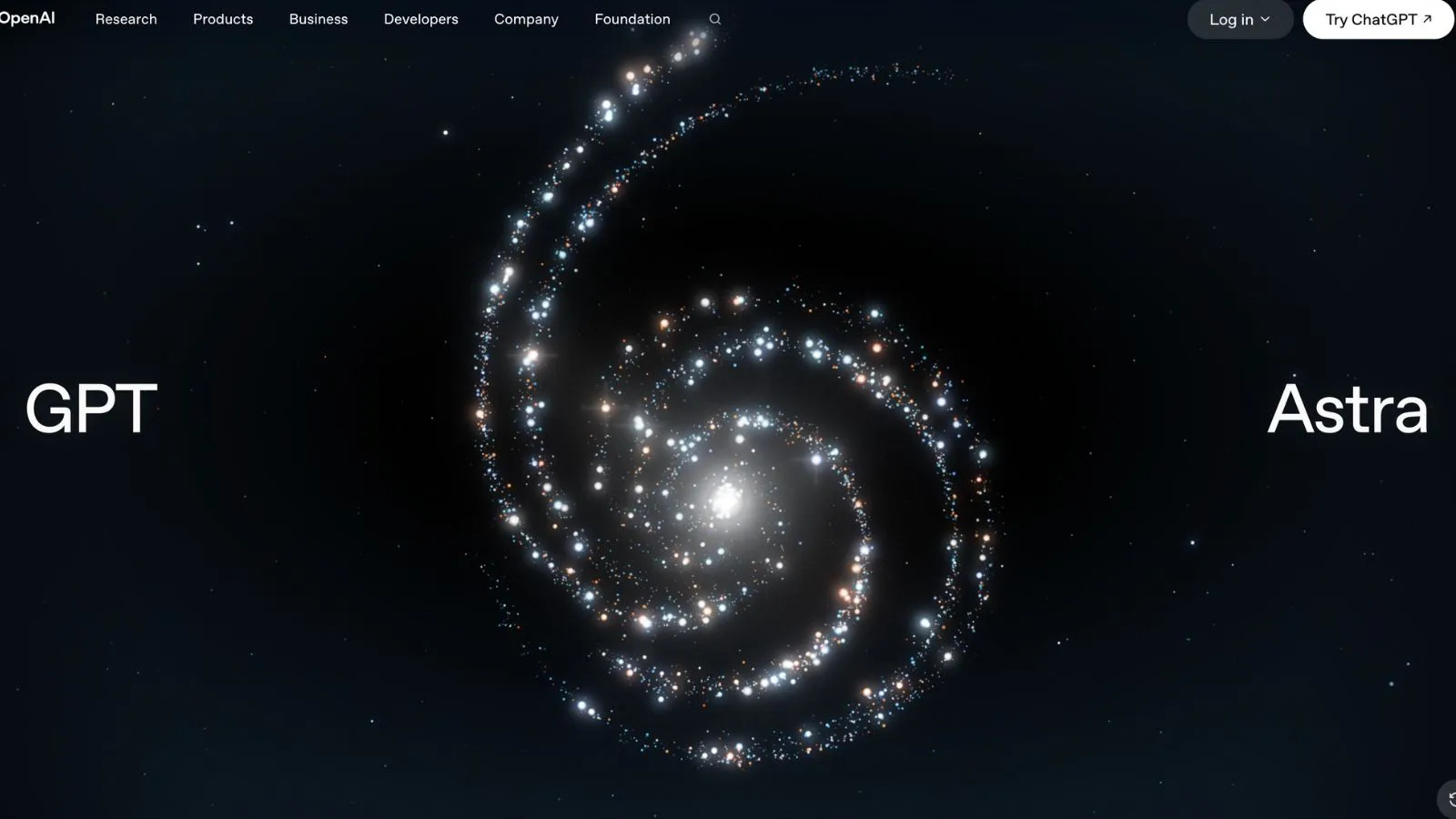
With all that in mind, OpenAI completely changed the game when they launched GPT-6 Astra. They call it the smartest and safest AI model yet. Instead of just writing text like older models, Astra can actually use software tools and finish entire work projects by itself with almost no human help.

For startups, agencies, and established enterprises alike, this launch marks a clear turning point in IT and operational strategy. Here is a breakdown of its breakthrough capabilities and how you can leverage them to lead your industry:

What Does GPT-6 Astra Actually Do Differently?

Unlike the previous version that simply answers prompts or writes isolated code snippets, Astra operates more autonomously. It works like a human employee. If required, it fills out forms, updates database records, manipulates spreadsheets, navigates web browsers, and manages intricate digital processes from start to finish. Given below are the highlights and state-of-the-art benchmarks shared by OpenAI:

  • Software Engineering: Outperforms previous models to deliver OpenAI’s most capable coding engine to date.
  • Computer & Browser Automation: Handles tedious administrative tasks, from deep web research to multi-app data entry.
  • Cybersecurity Capabilities: Advanced enough to trigger OpenAI’s highest internal risk classification, demonstrating high proficiency in identifying system vulnerabilities.
  • Professional Workflows: Generates complex documents, financial spreadsheets, and slide decks end-to-end.

Access is rolling out to select enterprise clients first, with subsequent access coming to ChatGPT Plus, Pro, Business, Enterprise tiers, the OpenAI API, and AWS.

Strategic Operational Realities Your Enterprise Must Prepare For

We are all used to the endless cycle of new AI models dropping every few months. They usually boast slightly higher test scores that feel easy to ignore. But the GPT-6 Astra is different. 

Instead of just generating text, it can navigate user interfaces, fill out multi-step forms, ship code, manage files, and execute entire professional workflows entirely on its own.

This evolution fundamentally rewrites your technology requirements and introduces significant risk vectors for unmonitored digital assets. 

Your stakeholders must immediately address these seven operational realities:

1. AI-Capable vs. AI-Ready 

Autonomous models only deliver value if the systems they interact with feature clean architecture, robust APIs, structured data, and secure access controls. 

Companies relying on legacy websites, fragmented applications, or fragile custom scripts cannot leverage this level of automation. 

Organizations with well-architected software will operate faster, reduce operational costs, and execute routine work with lean teams.

2. Raises Cybersecurity Stakes

OpenAI classified Astra under its highest internal risk tier because its underlying engine can identify and exploit system vulnerabilities autonomously. 

The exact capabilities that streamline legitimate business automation also expose poorly secured software. 

If you built your website, internal dashboards, or customer data pipelines quickly without rigorous security reviews, malicious actors now possess stronger tools to find those weak points.

3. Legacy Systems Are Vulnerable

Many mid-sized businesses run on legacy code that was patched repeatedly and never documented. 

That technical debt was manageable when the primary risk was an occasional system bug. 

Today, autonomous tools can probe entire networks for weaknesses at scale. It makes undocumented and inconsistently structured systems far harder to defend.

4. Assign Repetitive Tasks to AI

Tasks like data entry, report generation, client onboarding paperwork, inventory reconciliation, and basic support triage represent the exact tedious professional tasks Astra targets. 

Companies that have already digitized and structured these workflows can deploy automation immediately. 

Organizations relying on manual spreadsheets or disconnected software must re-engineer their processes before capturing any efficiency gains.

5. Falling Behind Tech-Driven Competitors 

A competitor with modern technology previously held a modest edge, slightly faster delivery or lower overhead. When AI agents operate software end-to-end, that edge compounds rapidly. 

Early adopters will reduce human error, speed up turnaround times, and scale operations without increasing headcount proportionately, leaving legacy operations behind on a much shorter timeline.

6. Fragmented Tech Stack Stalls 

Businesses frequently accumulate disconnected software and separate platforms for invoicing, scheduling, CRM, and project management without clean integration channels. 

Autonomous agents require clear, unified integration points to execute tasks efficiently. 

A fragmented tech stack frustrates your current staff and actively prevents your business from deploying modern AI workflows until you consolidate or bridge those systems.

7. Gain a Lasting Market Lead 

Waiting for autonomous AI to become ubiquitous before updating your tech stack creates unnecessary risk. 

Rebuilding legacy infrastructure, unifying data architectures, and hardening security after a breach or operational bottleneck costs significantly more than building modern systems correctly today. 

Investing in your digital foundation now secures a clear operational lead before automated workflows become the baseline standard.

What Smart Businesses Are Doing About It

Transitioning to advanced automation requires a deliberate strategy. Forward-thinking organizations should tear down their legacy infrastructure. 

Instead, getting ready for autonomous workflows is all about making smart, targeted adjustments to your current setup.

With fortified core architecture, addressing your operational bottlenecks, and upgrading security protocols, you stand miles ahead. 

In this way, our tech experts have built the agile foundation necessary to convert AI capabilities into bottom-line efficiency.

Check out how you can systematically prepare your operations for the next wave of automation:

  • Audit Your Existing Technical Stack: Before you attempt to plug in advanced automation tools, closely evaluate the state of your current platforms. Determine whether your core software rests on clean, maintainable, and well-documented code, or if your business relies on temporary patches and custom scripts that restrict new integrations. 
  • Identify High-Friction Workflows: Locate the specific operational areas where manual intervention creates delays, errors, or bottlenecks. Focus on repetitive, structured tasks—such as client onboarding paperwork, multi-step form processing, routine inventory reconciliation, and custom report generation. 
  • Elevate Your Cybersecurity Protocols: As AI systems become more adept at probing software environments, shift your evaluation criteria to rigorous security. Stop asking whether a system simply works fine and start verifying whether its architecture withstands automated vulnerability checks. 
  • Hire Specialized Teams: Rather than pretenders, one should hire seasoned experts in software development. They should be competent enough to understand modern architecture, API-first design, and secure system integration. That means no throwing money away on fixing mistakes later. You get the green light to roll out new automation tools with total peace of mind.

To get AI-ready, just be strategic. Clean your core code. Automate high-friction tasks. Tighten security. Build a solid foundation today so the technology can do the heavy lifting tomorrow.

Talk to Matech CO Before the Gap Widens

With the launch of GPT-6 by Astra, AI now operates real software, automates real workflows, and exposes real security gaps. This implies that those with a technical foundation will pull ahead while everyone else scrambles to catch up. 

Smart companies don’t waste time trying to piece this together alone. They hire dedicated experts for AI consulting services to get it done right. They audit your systems, identify where automation is necessary, and get started. 

Matech CO has 17+ years of experience helping businesses with digital transformation. We are too good at building systems that are secure, scalable, and genuinely ready for tools like GPT-6 Astra. 

As of now, we have already helped 140+ businesses put AI to work the right way; a few more are already in our pipeline, and we can do the same for you. Whether you need a website rebuilt, a legacy system audited, or an AI consulting partner, try us now.


Author Image

By Matech CO editorial team

Combining global expertise in technology, strategy, and creative thinking, we deliver pioneering solutions that drive what's next. Keep up with the latest advancements and insights by following our updates.

Despite billions invested in automation annually, 70% of enterprise digital transformations fail. The disappointment doesn’t stem from a lack of effort. It happens because off-the-shelf software rarely aligns with the complex, human realities of day-to-day operations. 

With all that in mind, OpenAI completely changed the game when they launched GPT-6 Astra. They call it the smartest and safest AI model yet. Instead of just writing text like older models, Astra can actually use software tools and finish entire work projects by itself with almost no human help.

For startups, agencies, and established enterprises alike, this launch marks a clear turning point in IT and operational strategy. Here is a breakdown of its breakthrough capabilities and how you can leverage them to lead your industry:

What Does GPT-6 Astra Actually Do Differently?

Unlike the previous version that simply answers prompts or writes isolated code snippets, Astra operates more autonomously. It works like a human employee. If required, it fills out forms, updates database records, manipulates spreadsheets, navigates web browsers, and manages intricate digital processes from start to finish. Given below are the highlights and state-of-the-art benchmarks shared by OpenAI:

  • Software Engineering: Outperforms previous models to deliver OpenAI’s most capable coding engine to date.
  • Computer & Browser Automation: Handles tedious administrative tasks, from deep web research to multi-app data entry.
  • Cybersecurity Capabilities: Advanced enough to trigger OpenAI’s highest internal risk classification, demonstrating high proficiency in identifying system vulnerabilities.
  • Professional Workflows: Generates complex documents, financial spreadsheets, and slide decks end-to-end.

Access is rolling out to select enterprise clients first, with subsequent access coming to ChatGPT Plus, Pro, Business, Enterprise tiers, the OpenAI API, and AWS.

Strategic Operational Realities Your Enterprise Must Prepare For

We are all used to the endless cycle of new AI models dropping every few months. They usually boast slightly higher test scores that feel easy to ignore. But the GPT-6 Astra is different. 

Instead of just generating text, it can navigate user interfaces, fill out multi-step forms, ship code, manage files, and execute entire professional workflows entirely on its own.

This evolution fundamentally rewrites your technology requirements and introduces significant risk vectors for unmonitored digital assets. 

Your stakeholders must immediately address these seven operational realities:

1. AI-Capable vs. AI-Ready 

Autonomous models only deliver value if the systems they interact with feature clean architecture, robust APIs, structured data, and secure access controls. 

Companies relying on legacy websites, fragmented applications, or fragile custom scripts cannot leverage this level of automation. 

Organizations with well-architected software will operate faster, reduce operational costs, and execute routine work with lean teams.

2. Raises Cybersecurity Stakes

OpenAI classified Astra under its highest internal risk tier because its underlying engine can identify and exploit system vulnerabilities autonomously. 

The exact capabilities that streamline legitimate business automation also expose poorly secured software. 

If you built your website, internal dashboards, or customer data pipelines quickly without rigorous security reviews, malicious actors now possess stronger tools to find those weak points.

3. Legacy Systems Are Vulnerable

Many mid-sized businesses run on legacy code that was patched repeatedly and never documented. 

That technical debt was manageable when the primary risk was an occasional system bug. 

Today, autonomous tools can probe entire networks for weaknesses at scale. It makes undocumented and inconsistently structured systems far harder to defend.

4. Assign Repetitive Tasks to AI

Tasks like data entry, report generation, client onboarding paperwork, inventory reconciliation, and basic support triage represent the exact tedious professional tasks Astra targets. 

Companies that have already digitized and structured these workflows can deploy automation immediately. 

Organizations relying on manual spreadsheets or disconnected software must re-engineer their processes before capturing any efficiency gains.

5. Falling Behind Tech-Driven Competitors 

A competitor with modern technology previously held a modest edge, slightly faster delivery or lower overhead. When AI agents operate software end-to-end, that edge compounds rapidly. 

Early adopters will reduce human error, speed up turnaround times, and scale operations without increasing headcount proportionately, leaving legacy operations behind on a much shorter timeline.

6. Fragmented Tech Stack Stalls 

Businesses frequently accumulate disconnected software and separate platforms for invoicing, scheduling, CRM, and project management without clean integration channels. 

Autonomous agents require clear, unified integration points to execute tasks efficiently. 

A fragmented tech stack frustrates your current staff and actively prevents your business from deploying modern AI workflows until you consolidate or bridge those systems.

7. Gain a Lasting Market Lead 

Waiting for autonomous AI to become ubiquitous before updating your tech stack creates unnecessary risk. 

Rebuilding legacy infrastructure, unifying data architectures, and hardening security after a breach or operational bottleneck costs significantly more than building modern systems correctly today. 

Investing in your digital foundation now secures a clear operational lead before automated workflows become the baseline standard.

What Smart Businesses Are Doing About It

Transitioning to advanced automation requires a deliberate strategy. Forward-thinking organizations should tear down their legacy infrastructure. 

Instead, getting ready for autonomous workflows is all about making smart, targeted adjustments to your current setup.

With fortified core architecture, addressing your operational bottlenecks, and upgrading security protocols, you stand miles ahead. 

In this way, our tech experts have built the agile foundation necessary to convert AI capabilities into bottom-line efficiency.

Check out how you can systematically prepare your operations for the next wave of automation:

  • Audit Your Existing Technical Stack: Before you attempt to plug in advanced automation tools, closely evaluate the state of your current platforms. Determine whether your core software rests on clean, maintainable, and well-documented code, or if your business relies on temporary patches and custom scripts that restrict new integrations. 
  • Identify High-Friction Workflows: Locate the specific operational areas where manual intervention creates delays, errors, or bottlenecks. Focus on repetitive, structured tasks—such as client onboarding paperwork, multi-step form processing, routine inventory reconciliation, and custom report generation. 
  • Elevate Your Cybersecurity Protocols: As AI systems become more adept at probing software environments, shift your evaluation criteria to rigorous security. Stop asking whether a system simply works fine and start verifying whether its architecture withstands automated vulnerability checks. 
  • Hire Specialized Teams: Rather than pretenders, one should hire seasoned experts in software development. They should be competent enough to understand modern architecture, API-first design, and secure system integration. That means no throwing money away on fixing mistakes later. You get the green light to roll out new automation tools with total peace of mind.

To get AI-ready, just be strategic. Clean your core code. Automate high-friction tasks. Tighten security. Build a solid foundation today so the technology can do the heavy lifting tomorrow.

Talk to Matech CO Before the Gap Widens

With the launch of GPT-6 by Astra, AI now operates real software, automates real workflows, and exposes real security gaps. This implies that those with a technical foundation will pull ahead while everyone else scrambles to catch up. 

Smart companies don’t waste time trying to piece this together alone. They hire dedicated experts for AI consulting services to get it done right. They audit your systems, identify where automation is necessary, and get started. 

Matech CO has 17+ years of experience helping businesses with digital transformation. We are too good at building systems that are secure, scalable, and genuinely ready for tools like GPT-6 Astra. 

As of now, we have already helped 140+ businesses put AI to work the right way; a few more are already in our pipeline, and we can do the same for you. Whether you need a website rebuilt, a legacy system audited, or an AI consulting partner, try us now.

Start your cloud migration today

Experience Faster and Smarter Operations With Matech CO.

Leave a comment

Your email address will not be published. Required fields are marked *